The macro-ecosystems of Africa are among the richest of the Biosphere in terms of diversity in plants species (International Plant Genetic Resources Institute, IPGRI 1999). Indigenous fruit tree species play a key role in African traditional agroforestry systems and participate in balancing daily diets (Diop et al. 2005). In Benin, at least 172 food plants species are regularly used by local populations (Codjia et al. 2003). These species which are of great utility for local communities are threatened in their natural habitats by deforestation, extensive harvesting of firewood, shifting cultivation that uses burning of natural vegetations, extensive grazing and uncontrolled movement of genetic material for establishment of plantations (FAO 1999). The decline of indigenous fruit species could have adverse effects on food security, sources of income for local populations and constitute a barrier to the first Millennium Development Goal which aims at combating extreme poverty and hunger in the world.
Forest laws in most African countries permit the harvesting of non-timber forest products (NTFPs) despite forestry offices having limited information about the impact of NTFP exploitation on the persistence of the concerned species (Eyog Matig et al. 2002).
Economic pressure, poor investment in design and implementation of forest management, inadequate legislation concerning sustained non-timber resource exploitation, as well as lack of sufficient knowledge about the resources themselves are the most important causes of their depletion (Guedje et al. 2003).
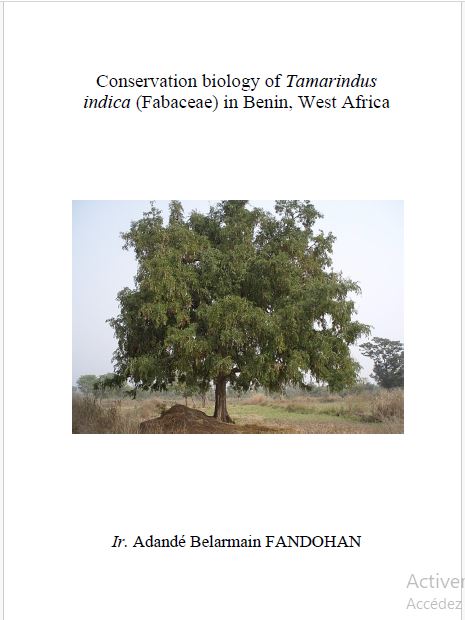
Conservation biology of Tamarindus indica (Fabaceae) in Benin, West Africa - Dissertation
Ir. Adandé Belarmain FANDOHAN
23 janv. 2026
Foresterie et Gestion de la Faune
(4.0)
De la même catégorie Foresterie et Gestion de la Faune

Foresterie et Gestion de la Faune